


Hawaii Scuba Diving Tours: Dive Hawaii’s Underwater World
Quick summary: Scuba diving in Hawaii takes you deeper into the islands’ extraordinary underwater world than snorkelling, exploring vibrant reefs, dramatic lava formations, shipwrecks, and abundant marine life including turtles, rays, eels and sometimes sharks and dolphins. Hawaii’s warm, clear waters and unique volcanic topography make it a world-class dive destination for all levels. Certified divers can explore reefs, wrecks and lava tubes on guided dives, while complete beginners can try an introductory or “discover scuba” dive with an instructor, no certification needed. Each island offers excellent diving. This guide covers what to expect, diving for beginners and the certified, and how to choose a dive.
Hawaii Scuba Diving Tours at a Glance
| Detail | Information |
|---|---|
| What it is | Scuba diving Hawaii’s underwater world |
| Goes deeper than | Snorkelling, exploring beneath the surface |
| What you see | Reefs, lava formations, wrecks, marine life |
| Marine life | Turtles, rays, eels, sometimes sharks, dolphins |
| The waters | Warm, clear, with unique volcanic topography |
| For beginners | Intro/”discover scuba” dives, no certification |
| For the certified | Guided reef, wreck and lava dives |
| Every island | All islands offer excellent diving |
| Best for | Divers and adventurous beginners |
What Is Scuba Diving in Hawaii Like?
Scuba diving in Hawaii takes you deeper into the islands’ extraordinary underwater world than snorkelling, letting you explore vibrant reefs, dramatic lava formations, shipwrecks and abundant marine life beneath the surface, in warm, clear waters.
Hawaii is a world-class dive destination, thanks to its warm, clear waters, abundant marine life and, uniquely, its volcanic topography. Diving here, you can explore coral reefs teeming with tropical fish, dramatic lava formations, arches, caverns and lava tubes created by the islands’ volcanic origins, and shipwrecks that have become artificial reefs. The marine life is abundant and varied: green sea turtles, rays, moray eels, octopus, and countless tropical fish, with the chance of sharks, dolphins and other larger life in open water. Going beneath the surface reveals a world that snorkelling only hints at.
Diving in Hawaii suits all levels. Certified divers can explore the reefs, wrecks and lava formations on guided dives, from easy reef dives to more advanced sites. Complete beginners can try an introductory or “discover scuba” dive, where an instructor takes you on a shallow, supervised dive with no certification needed — a popular way to experience diving for the first time. There are also courses for those wanting to get certified.
Each of the main islands offers excellent diving, with its own sites and specialities. Diving tours typically provide equipment, instruction and a boat to the dive sites, often with two dives in a trip. For those wanting to go beyond snorkelling and explore Hawaii’s underwater world up close — whether experienced divers or curious beginners — scuba diving is one of the most rewarding ways to experience the islands’ marine environment.
What Will You See Scuba Diving in Hawaii?
Hawaii’s underwater world is rich and varied, and knowing what you might see adds to the anticipation of a dive.
Coral reefs — vibrant coral reefs teeming with marine life, the colourful foundation of Hawaii’s underwater world.
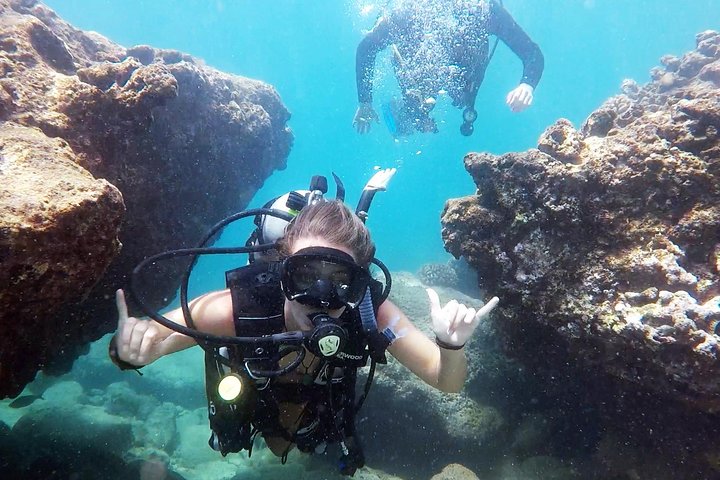
Lava formations — uniquely, Hawaii’s volcanic origins create dramatic lava formations, arches, caverns and lava tubes to explore — a distinctive feature of diving here.
Green sea turtles — the beloved green sea turtles, often seen up close underwater — a highlight for many divers.
Rays and eels — rays gliding over the reef and sand, and moray eels in crevices.
Shipwrecks — wrecks that have become artificial reefs, home to marine life and fascinating to explore (on wreck dives).
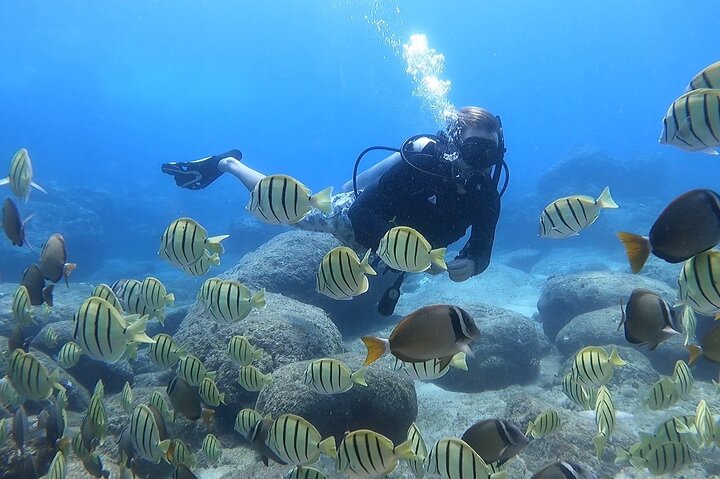
Tropical fish — countless colourful tropical fish in dazzling variety throughout.
Sharks, dolphins and larger life — the chance of reef sharks, dolphins and other larger marine life, especially in open water — a thrill when they appear.
Octopus and reef creatures — octopus and other fascinating reef creatures for the observant diver.
So scuba diving in Hawaii reveals a rich, varied underwater world: vibrant coral reefs, dramatic volcanic lava formations and caverns, shipwrecks, green sea turtles, rays, eels, countless tropical fish, and the chance of sharks, dolphins and other larger life. What you see depends on the site, the island, the conditions and a bit of luck, but Hawaii’s diving is generally abundant and rewarding. The unique lava formations — arches, caverns and tubes created by the volcanic origins — set Hawaii diving apart from many destinations, and the green sea turtles seen up close are a particular highlight. Different sites offer different experiences, from easy reefs to dramatic lava topography and wrecks, so there’s plenty to explore across multiple dives and islands.
Can Beginners Try Scuba Diving in Hawaii?
Scuba diving in Hawaii is open to complete beginners as well as certified divers, so it’s worth understanding the options.
Introductory / “discover scuba” dives — complete beginners can try an introductory dive (often called “discover scuba”), where an instructor takes you on a shallow, supervised dive after a briefing, with no certification needed — a popular, accessible way to experience diving for the first time.
No experience required — for an intro dive, no prior experience or certification is needed; the instructor handles the technical side and stays with you, so you simply enjoy the experience.
A taste of diving — an intro dive gives a real taste of scuba, letting you breathe underwater and explore a reef, which many find magical — and a great way to decide if you want to get certified.
Certification courses — those wanting to dive independently can take a certification course in Hawaii, learning the skills to become a certified diver (takes several days).
Certified divers — already certified divers can join guided dives to explore the reefs, wrecks and lava formations, from easy to advanced sites, bringing their qualification.
Health and age considerations — diving has some health and age requirements (a basic health check, minimum age), so check you’re eligible, especially for intro dives.
So scuba diving in Hawaii is genuinely open to beginners as well as the certified. Complete beginners can try an introductory or “discover scuba” dive with an instructor, needing no certification or experience — an accessible, popular way to experience diving for the first time and a great taster. Those wanting to dive independently can get certified in Hawaii, and certified divers can explore the full range of sites. This means almost anyone curious about diving can give it a go, whether a one-off intro dive or a step towards certification. Note there are some health and age requirements, so it’s worth checking eligibility. For the curious, an intro dive is a wonderful way to experience Hawaii’s underwater world beyond snorkelling.
How Does Scuba Diving Compare to Snorkelling in Hawaii?
Scuba diving and snorkelling both explore Hawaii’s underwater world but offer different experiences, so it’s worth understanding how they compare.
Depth and access — diving takes you beneath the surface to explore reefs, lava formations, caverns and wrecks up close, reaching depths and sites snorkelling can’t; snorkelling stays at the surface, looking down.
The experience — diving is a more immersive, up-close experience of the underwater world, letting you explore the topography and get close to marine life; snorkelling is a more casual, accessible overview from above.
Skill and commitment — snorkelling needs little skill and no training (just comfort in water); diving requires certification (or an instructor-led intro dive) and more commitment, equipment and briefing.
Cost — diving generally costs more than snorkelling, given the equipment, instruction and boat.
Accessibility — snorkelling is open to almost anyone; diving has some health and age requirements and requires more confidence, though intro dives make it accessible to beginners.
What you see — both see abundant marine life, but diving reveals the lava formations, caverns, wrecks and deeper reefs that snorkelling can’t, and gets closer to the marine life.
So diving and snorkelling are complementary: snorkelling is the accessible, casual, surface overview open to almost anyone, while diving is the deeper, more immersive, up-close exploration for those wanting to go further, reaching the lava formations, caverns, wrecks and depths snorkelling can’t. Choose snorkelling for easy, accessible, budget-friendly fun suitable for all, and diving to explore Hawaii’s underwater world more deeply and intimately, whether as a certified diver or a curious beginner on an intro dive. Many visitors do both: snorkelling for casual outings, and diving for a deeper experience. For those drawn to the underwater world, diving offers a richer, more immersive encounter — and the unique volcanic topography makes Hawaii an especially rewarding place to dive.
Practical Tips for Hawaii Scuba Diving Tours
- Beginners can try an intro dive — no certification needed, just an instructor.
- Certified divers should bring their certification for guided dives.
- Hawaii’s lava formations are unique — arches, caverns and tubes to explore.
- Check health and age requirements — diving has some eligibility rules.
- Book ahead — popular dive tours fill up.
- Don’t fly too soon after diving — leave time before flights (ask your operator).
- Dive responsibly — never touch coral or wildlife; use reef-safe sunscreen.
Are Hawaii Scuba Diving Tours Worth It?
For divers and adventurous beginners wanting to explore Hawaii’s underwater world up close, scuba diving tours are well worth it — Hawaii is a world-class dive destination offering reefs, unique volcanic formations, wrecks and abundant marine life beneath the surface.
The appeal is a deeper, more immersive encounter with the underwater world than snorkelling allows. Hawaii’s warm, clear waters, abundant marine life and uniquely volcanic topography make it a superb place to dive, where you can explore vibrant coral reefs, dramatic lava formations, arches, caverns and lava tubes, shipwrecks turned artificial reefs, and get close to green sea turtles, rays, eels, countless fish, and sometimes sharks and dolphins. The unique lava topography sets Hawaii diving apart from many destinations. Best of all, diving here is open to all levels: certified divers can explore the full range of sites, while complete beginners can try an instructor-led introductory dive with no certification needed — an accessible, magical way to experience breathing underwater for the first time. For those drawn to the marine world, diving offers one of the most rewarding ways to experience Hawaii.
The honest considerations are that diving requires more commitment, cost and some eligibility than snorkelling. It generally costs more (given equipment, instruction and boats), requires certification or an instructor-led intro dive, and has some health and age requirements, so it’s worth checking eligibility, especially for intro dives. Diving also demands more confidence in the water than snorkelling. And there are safety practices to follow, such as not flying too soon after diving. Those wanting a casual, budget-friendly, accessible underwater experience might prefer snorkelling, which is open to almost anyone.
But for its audience, diving in Hawaii is exceptional. Whether you’re a certified diver exploring lava caverns and wrecks, or a curious beginner trying an intro dive on a reef, it reveals an underwater world that snorkelling only hints at, in a world-class destination with uniquely dramatic volcanic topography. For divers and adventurous beginners wanting to go deeper into Hawaii’s marine world, scuba diving tours are thoroughly worth it — just check your eligibility, book ahead, and dive responsibly to protect the reefs and marine life.
Scuba diving in Hawaii takes you deeper into the islands’ underwater world than snorkelling, exploring vibrant reefs, dramatic lava formations, shipwrecks and abundant marine life beneath the surface, in warm, clear waters. Hawaii is a world-class dive destination thanks to its warm, clear water, abundant marine life and uniquely volcanic topography, with lava arches, caverns and tubes to explore. You may see green sea turtles, rays, eels, countless fish, and sometimes sharks and dolphins. Diving suits all levels, from certified divers to complete beginners trying an instructor-led introductory dive.
Hawaii’s underwater world is rich and varied: vibrant coral reefs; uniquely dramatic lava formations, arches, caverns and tubes created by the volcanic origins; green sea turtles often seen up close; rays and moray eels; shipwrecks turned artificial reefs; countless colourful tropical fish; and the chance of reef sharks, dolphins and other larger life, especially in open water, plus octopus and reef creatures. What you see depends on the site, island, conditions and luck. The unique lava formations set Hawaii diving apart, and the turtles seen up close are a particular highlight.
Yes, complete beginners can try an introductory dive, often called discover scuba, where an instructor takes you on a shallow, supervised dive after a briefing, with no certification or prior experience needed. The instructor handles the technical side and stays with you, so you simply enjoy breathing underwater and exploring a reef, which many find magical and a great way to decide whether to get certified. Those wanting to dive independently can take a certification course in Hawaii. Note diving has some health and age requirements, so check you are eligible, especially for intro dives.
Not necessarily. Certified divers can join guided dives to explore the reefs, wrecks and lava formations, bringing their certification. But complete beginners without certification can try an introductory or discover scuba dive, where an instructor takes them on a shallow, supervised dive with no certification needed. Those wanting to dive independently in future can take a certification course in Hawaii, which takes several days. So you can experience scuba diving whether or not you are certified, with intro dives making it accessible to anyone curious, subject to health and age requirements.
They are complementary. Snorkelling stays at the surface looking down, needs little skill and is open to almost anyone, offering a casual, accessible overview. Diving takes you beneath the surface to explore reefs, lava formations, caverns and wrecks up close, reaching depths and sites snorkelling cannot, for a more immersive experience, but requires certification or an instructor-led intro dive, more commitment and cost, and has some eligibility rules. Choose snorkelling for easy, accessible fun, and diving to explore the underwater world more deeply. Many visitors do both.
Each of the main islands offers excellent diving, with its own sites and specialities, so there is great diving wherever you are. All share Hawaii’s warm, clear waters, abundant marine life and unique volcanic topography of lava arches, caverns and tubes. The best choice often comes down to which island you are visiting and the specific sites available, from easy reefs to dramatic lava formations and wrecks. Local dive operators on each island know the best sites for the conditions and your level. So rather than one island being clearly best, each offers rewarding diving worth exploring.
Scuba diving is generally safe when done responsibly with reputable operators, proper equipment and qualified instructors or dive guides. Beginners on intro dives are closely supervised by an instructor throughout. However, diving has inherent risks and some health and age requirements, so a basic health check and eligibility screening apply, and you should be honest about any health conditions. Follow safety practices, including not flying too soon after diving to avoid decompression issues, and listen to your instructor or guide. Choosing a reputable, well-reviewed dive operator and following all guidance keeps diving safe and enjoyable.
For divers and adventurous beginners wanting to explore Hawaii’s underwater world up close, yes. Hawaii is a world-class dive destination offering reefs, unique volcanic lava formations, wrecks and abundant marine life, open to all levels, from certified divers to beginners on instructor-led intro dives. It reveals an underwater world snorkelling only hints at. The considerations are that diving costs more, requires certification or an intro dive, has some health and age requirements, and demands more confidence than snorkelling. Those wanting casual, accessible fun might prefer snorkelling. For its audience, thoroughly worth it.