

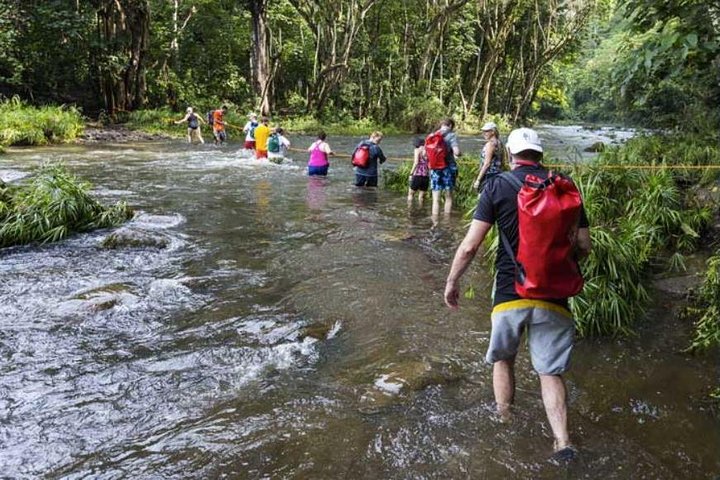


Hawaii Hiking Tours: Explore the Islands on Foot
Quick summary: Hawaii offers some of the world’s most spectacular hiking — trails leading to cascading waterfalls, through lush rainforest, along dramatic sea cliffs, across volcanic landscapes, and up to sweeping summit views. From easy, family-friendly walks to challenging full-day treks, there’s a hike for every level, and guided tours add safety, local knowledge and access to the best (and sometimes otherwise hard-to-find) trails. Each island offers distinctive hiking: Kauai’s cliffs and canyons, the Big Island’s volcanoes, Maui’s crater and waterfalls, Oahu’s coastal and ridge trails. Hiking is one of the best ways to experience the islands’ natural beauty up close. This guide covers the types of hikes, guided vs self-guided, and how to choose.
Hawaii Hiking Tours at a Glance
| Detail | Information |
|---|---|
| What it is | Exploring Hawaii’s landscapes on foot |
| What you see | Waterfalls, rainforest, cliffs, volcanoes, summits |
| Range | Easy family walks to challenging full-day treks |
| Guided tours add | Safety, local knowledge, trail access |
| Kauai | Cliffs, canyons, the Na Pali trail |
| Big Island | Volcanic landscapes and craters |
| Maui | Haleakala crater, bamboo forests, waterfalls |
| Oahu | Coastal and ridge trails, Diamond Head |
| Best for | Those wanting to experience nature up close |
What Is Hiking in Hawaii Like?
Hawaii offers some of the world’s most spectacular hiking — trails leading to cascading waterfalls, through lush rainforest, along dramatic sea cliffs, across volcanic landscapes, and up to sweeping summit views. It’s one of the best ways to experience the islands’ natural beauty up close, under your own power.
The variety and drama of Hawaii’s hiking are extraordinary. Because the islands are volcanic, mountainous and lush, their trails pass through an astonishing range of scenery: you might hike through tropical rainforest to a hidden waterfall and swimming hole, along the edge of towering sea cliffs, across otherworldly volcanic terrain and craters, up a ridge to panoramic views, or into a deep canyon. The scenery is often inaccessible by any other means, so hiking reveals a side of Hawaii that drivers and beachgoers never see.
There’s a hike for every level. Easy, family-friendly walks — short, gentle trails to viewpoints or waterfalls — suit beginners, families and casual walkers. Moderate hikes offer more distance and reward for reasonable fitness. Challenging full-day treks — like Kauai’s famous Na Pali coastal trail or long volcanic hikes — test the fit and experienced. So whatever your ability, there’s suitable hiking.
Guided hiking tours add real value: safety (important on remote or tricky trails), local knowledge (about the geology, plants, culture and history), and access to the best trails — including some that are otherwise hard to find, on private land, or require a guide. You can also hike many trails self-guided. Each island offers distinctive hiking, from Kauai’s cliffs to the Big Island’s volcanoes. For experiencing Hawaii’s spectacular natural beauty up close, on foot, hiking is one of the most rewarding activities the islands offer.
What Kinds of Hikes Does Each Island Offer?
Each Hawaiian island offers distinctive hiking through its own scenery, so knowing what each offers helps you plan.
Kauai — cliffs, canyons and coast — the “Garden Isle” offers spectacular hiking: the famous, challenging Na Pali coastal trail along the dramatic cliffs, Waimea Canyon trails, waterfalls and lush rainforest — world-class, often demanding scenery.
Big Island — volcanoes and lava — the Big Island offers unique volcanic hiking in Hawaii Volcanoes National Park — across lava landscapes, craters and through lava tubes — plus rainforest and waterfalls, an otherworldly experience (conditions vary with volcanic activity).
Maui — crater, forest and waterfalls — Maui offers the dramatic Haleakala crater hikes (a lunar-like volcanic landscape), bamboo forests and waterfalls (notably along the Road to Hana), and coastal trails.
Oahu — ridges, coast and Diamond Head — Oahu offers accessible ridge and coastal trails, the iconic Diamond Head crater hike, and lush valley and waterfall walks, close to Honolulu.
Waterfalls everywhere — all islands have waterfall hikes through lush scenery — a quintessential Hawaii hiking experience.
Range of difficulty on each — every island offers easy to challenging hikes, so you can find suitable trails wherever you are.
So each island offers distinctive, spectacular hiking: Kauai for world-class cliffs, canyons and the Na Pali trail; the Big Island for unique volcanic landscapes and craters; Maui for the Haleakala crater, bamboo forests and waterfalls; and Oahu for accessible ridge and coastal trails and Diamond Head. All offer waterfall hikes and a range of difficulty. Which island is best for hiking depends on the scenery you want — Kauai and the Big Island offer the most dramatic and unique landscapes, while all islands have wonderful trails. Wherever you’re based, you’ll find hiking to suit your interests and ability, from easy family walks to challenging treks, through some of the world’s most beautiful and varied scenery.
Should You Take a Guided Hike or Go Self-Guided?
The choice between a guided tour and self-guided hiking is worth considering, as both have their place.
Guided hikes — safety — guided tours add safety, important on remote, tricky or unfamiliar trails, with a guide who knows the route, conditions and hazards.
Guided hikes — local knowledge — guides share local knowledge — about the geology, plants, wildlife, culture and history — greatly enriching the experience beyond just the walk.
Guided hikes — access — guided tours can offer access to the best trails, including some that are otherwise hard to find, on private land, or require a guide — a real advantage.
Guided hikes — logistics — guides handle logistics, transport and navigation, so you just hike.
Self-guided — freedom and cost — many trails can be hiked self-guided, which is free (or cheaper), flexible and independent — ideal for experienced, confident hikers on well-marked trails.
Self-guided — caution needed — self-guided hikers must research the trail, conditions and safety themselves, and some trails are genuinely dangerous or hard to find without a guide.
Match to the hike and your experience — easy, popular, well-marked trails suit self-guided hiking; remote, tricky, or access-restricted trails favour a guide.
So whether to take a guided hike or go self-guided depends on the trail and your experience. Guided tours add safety, local knowledge, access to the best (sometimes otherwise-inaccessible) trails, and handled logistics — valuable on remote, tricky or unfamiliar trails, and for those wanting to learn about the environment. Self-guided hiking is free or cheaper, flexible and independent, ideal for experienced, confident hikers on easy, popular, well-marked trails. Many visitors do both: self-guided on easy popular trails, and guided for more remote, challenging, or access-restricted hikes, or to gain local knowledge. The key is matching the approach to the hike and your experience — being honest about your ability and the trail’s demands, and never underestimating Hawaii’s terrain and conditions, which can be more challenging and hazardous than they appear.
How Do You Choose a Hike or Hiking Tour?
Choosing the right hike makes for a better and safer experience, matching it to your fitness and interests.
Match the difficulty to your fitness — choose a hike suited to your fitness and experience: easy family walks for beginners, moderate hikes for the reasonably fit, challenging treks for the fit and experienced.
Choose the scenery — decide what you want to see: waterfalls, rainforest, cliffs, volcanoes, summits or canyons — and choose a trail or tour accordingly.
Guided or self-guided — decide between a guided tour (safety, knowledge, access) or self-guided (free, flexible), based on the trail and your experience.
Choose a reputable guide/operator — for guided hikes, choose a reputable, knowledgeable operator with good safety and good reviews.
Check conditions and preparation — check trail conditions, weather and what to bring (water, footwear, sun protection), as Hawaii’s terrain and weather can be demanding.
Consider the island — consider the island’s hiking — Kauai and the Big Island for dramatic, unique landscapes; all islands for varied trails.
Respect nature and safety — respect trail rules, conditions and your limits, never underestimating the terrain, flash-flood risk near streams, or ocean hazards near coastal trails.
So choosing a hike or hiking tour comes down to matching the difficulty to your fitness and experience (the most important factor for safety and enjoyment), choosing the scenery you want (waterfalls, volcanoes, cliffs, etc.), and deciding between guided (safety, knowledge, access) or self-guided (free, flexible) based on the trail and your experience. Choosing a reputable guide for guided hikes, checking conditions and preparing properly (water, footwear, sun protection), considering the island’s hiking, and respecting nature and your limits all matter. Hawaii’s terrain and weather can be more demanding and hazardous than they appear — with flash-flood risks near streams and ocean hazards near coasts — so honest assessment of your ability and proper preparation are key. With a well-chosen hike matched to your fitness, hiking offers one of the most rewarding ways to experience Hawaii’s spectacular natural beauty.
Practical Tips for Hawaii Hiking Tours
- Match the hike to your fitness — easy walks to challenging treks.
- Guided tours add safety, local knowledge and access to the best trails.
- Self-guided suits experienced hikers on easy, popular, well-marked trails.
- Kauai and the Big Island offer the most dramatic, unique hiking.
- Prepare properly — water, proper footwear, sun protection.
- Respect the terrain — beware flash floods near streams and coastal hazards.
- Don’t underestimate Hawaii’s trails, which can be tougher than they look.
Are Hawaii Hiking Tours Worth It?
For those wanting to experience Hawaii’s natural beauty up close, hiking tours are well worth it — the islands offer some of the world’s most spectacular and varied hiking, and guided tours add safety, knowledge and access to the best trails.
The appeal is spectacular, varied scenery experienced up close. Hawaii’s volcanic, mountainous, lush landscape offers an astonishing range of trails: through tropical rainforest to hidden waterfalls and swimming holes, along towering sea cliffs, across otherworldly volcanic terrain and craters, up ridges to panoramic views, and into deep canyons — much of it inaccessible by any other means. With a hike for every level, from easy family walks to challenging full-day treks, and each island offering distinctive scenery (Kauai’s cliffs, the Big Island’s volcanoes, Maui’s crater, Oahu’s ridges), there’s wonderful hiking for everyone. Guided tours add real value through safety, local knowledge about the environment, access to the best (sometimes otherwise-inaccessible) trails, and handled logistics. For experiencing the islands’ natural beauty on foot, it’s one of the most rewarding activities Hawaii offers.
The honest considerations are fitness, preparation and safety. Hiking is an active activity requiring fitness appropriate to the trail, so matching the hike to your ability matters — and Hawaii’s terrain and weather can be more demanding and hazardous than they appear, with flash-flood risks near streams and ocean hazards near coastal trails, so proper preparation (water, footwear, sun protection), respecting conditions, and honest assessment of your limits are essential. Self-guided hikers in particular must research trails and safety themselves. Those wanting a gentle, effortless experience might prefer easy walks or other activities, while challenging treks are only for the fit and experienced.
But for its audience, hiking in Hawaii is wonderful. Whether an easy family walk to a waterfall, a moderate rainforest or coastal hike, or a challenging trek across volcanic terrain or along dramatic cliffs, it offers spectacular, up-close access to the islands’ natural beauty, with guided tours adding safety, knowledge and access. For those wanting to experience Hawaii’s nature on foot, hiking tours are thoroughly worth it — just match the hike to your fitness, prepare properly, respect the terrain, and enjoy some of the world’s most beautiful and varied trails.
Hawaii offers some of the world’s most spectacular hiking, with trails leading to cascading waterfalls, through lush rainforest, along dramatic sea cliffs, across volcanic landscapes, and up to sweeping summit views. Because the islands are volcanic, mountainous and lush, their trails pass through an astonishing range of scenery, much of it inaccessible by any other means. There is a hike for every level, from easy family-friendly walks to challenging full-day treks. Each island offers distinctive hiking, and guided tours add safety, local knowledge and access to the best trails. It is one of the best ways to experience the islands’ beauty up close.
Each island offers distinctive hiking. Kauai, the Garden Isle, offers world-class cliffs, canyons and the famous challenging Na Pali coastal trail, plus waterfalls and rainforest. The Big Island offers unique volcanic hiking in Hawaii Volcanoes National Park, across lava landscapes and craters (conditions vary), plus rainforest and waterfalls. Maui offers the dramatic Haleakala crater, bamboo forests and waterfalls. Oahu offers accessible ridge and coastal trails, the iconic Diamond Head hike, and valley walks near Honolulu. All islands have waterfall hikes and a range of difficulty, so you can find suitable trails wherever you are.
It depends on the trail and your experience. Guided tours add safety (important on remote or tricky trails), local knowledge about the geology, plants and culture, access to the best trails (including some otherwise hard to find, on private land, or requiring a guide), and handled logistics. Self-guided hiking is free or cheaper, flexible and independent, ideal for experienced, confident hikers on easy, popular, well-marked trails, but you must research the trail and safety yourself. So easy popular trails suit self-guided hiking, while remote, tricky or access-restricted trails favour a guide. Many visitors do both.
Yes, Hawaii has plenty of easy, family-friendly hikes suitable for beginners and families, alongside its challenging treks. Short, gentle trails to viewpoints, waterfalls or through rainforest suit casual walkers, families with children and those wanting a relaxed experience. The iconic Diamond Head hike on Oahu, for example, is popular and achievable for many, and all islands have accessible waterfall and scenic walks. So you do not need to be a serious hiker to enjoy Hawaii’s trails, there is wonderful easy hiking too. Match the hike to your fitness, choosing gentle trails for families and beginners.
It depends on the scenery you want, as each island offers distinctive, spectacular hiking. Kauai and the Big Island offer the most dramatic and unique landscapes, Kauai for its cliffs, canyons and the Na Pali trail, the Big Island for its volcanic terrain and craters, so these are often considered the best for serious, scenic hiking. Maui offers the Haleakala crater, bamboo forests and waterfalls, and Oahu offers accessible ridge and coastal trails and Diamond Head. All islands have wonderful trails of varying difficulty, so you will find great hiking wherever you are based.
Hiking in Hawaii is generally safe with proper preparation and respect for the conditions, but the terrain and weather can be more demanding and hazardous than they appear, so caution is needed. Key risks include flash floods near streams (especially in rain), ocean hazards near coastal trails, slippery conditions, and challenging, remote terrain. Prepare properly with water, proper footwear and sun protection, check trail and weather conditions, respect your limits, and never underestimate the trails. Guided tours add safety through local knowledge and experience, especially on remote or tricky trails. With preparation and care, hiking is safe and rewarding.
Match the difficulty to your fitness and experience, the most important factor: easy family walks for beginners, moderate hikes for the reasonably fit, challenging treks for the fit and experienced. Choose the scenery you want, waterfalls, rainforest, cliffs, volcanoes, summits or canyons, and decide between a guided tour (safety, knowledge, access) or self-guided (free, flexible) based on the trail and your experience. For guided hikes, choose a reputable, knowledgeable operator. Check trail conditions, weather and what to bring, consider the island’s hiking, and respect nature, the terrain and your limits.
For those wanting to experience Hawaii’s natural beauty up close, yes. The islands offer some of the world’s most spectacular and varied hiking, through rainforest to waterfalls, along sea cliffs, across volcanic terrain and up to summit views, with a hike for every level and distinctive scenery on each island. Guided tours add safety, local knowledge and access to the best trails. The considerations are that hiking is active and requires fitness appropriate to the trail, and Hawaii’s terrain and weather can be demanding and hazardous, so preparation and respecting your limits are essential. For experiencing nature on foot, thoroughly worth it.